Each January, the space community pauses to reflect on the bravery, sacrifice, and legacy of those who have given their lives in the pursuit of space exploration on NASA’s Day of Remembrance.This day falls near the anniversaries of some of NASA’s most profound tragedies — moments that reshaped the agency’s approach to safety, innovation, and human spaceflight. In 2026, NASA will observe the Day of Remembrance on January 22.
Remembering the Fallen
The Day of Remembrance honors all who were lost in the line of duty, with recognition to the crews of Apollo 1, Space Shuttle Challenger, and Space Shuttle Columbia — three pivotal missions that ended in tragedy but also prompted deep reflection and progress:
- Apollo 1 (1967): During a pre-launch test on January 27, a cabin fire claimed the lives of astronauts Virgil “Gus” Grissom, Ed White, and Roger Chaffee. Their loss led to significant design and safety improvements for future Apollo missions.
- Challenger (1986): On January 28, the Challenger orbiter broke apart shortly after liftoff due to a booster failure, taking the lives of all seven crew members, including Christa McAuliffe, who would have been the first teacher in space.
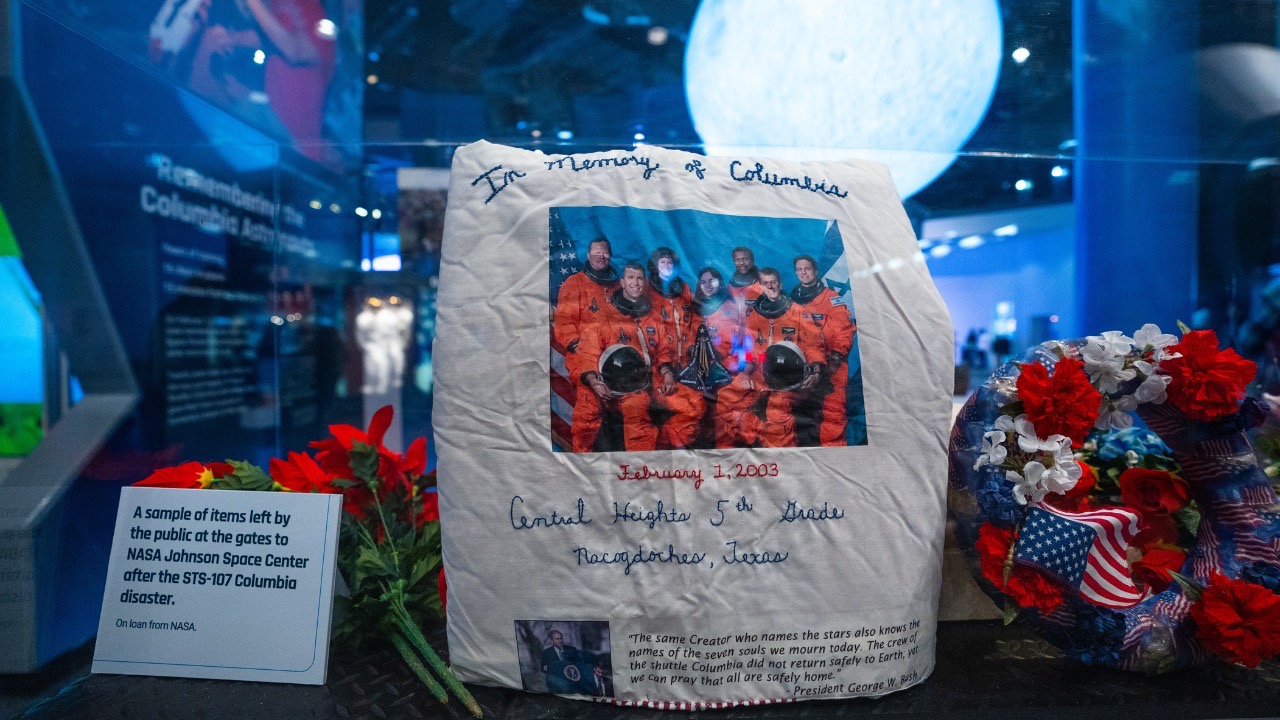
- Columbia (2003): During re-entry on February 1, Columbia disintegrated after a piece of foam damaged the wing during launch. All seven crew members perished.
Reflecting on Legacy, Inspiring Tomorrow
At Space Center Houston, we honor these astronauts and NASA personnel not only by remembering their sacrifice, but by carrying forward their spirit of curiosity and courage. Their legacy lives on in the engineers who design safer spacecraft, the educators who inspire future explorers, and the learners who look up at the stars and imagine what’s possible. possible.
NASA’s Day of Remembrance invites us to pause and reflect on the cost of exploration, the value of human life, and the importance of striving for discovery with responsibility and heart. As we remember those we’ve lost, we also recommit to our shared purpose: bringing people and space closer together, inspiring the next generation, and continuing the journey they helped make possible.
How You Can Take Part
While NASA centers and affiliated organizations hold formal ceremonies — such as wreath-laying and memorial events — individuals and families can also observe this day through quiet reflection, learning about the missions and people honored, and sharing their stories.
By engaging in space history and honoring those who gave everything for humankind, we keep their memory alive for future explorers.